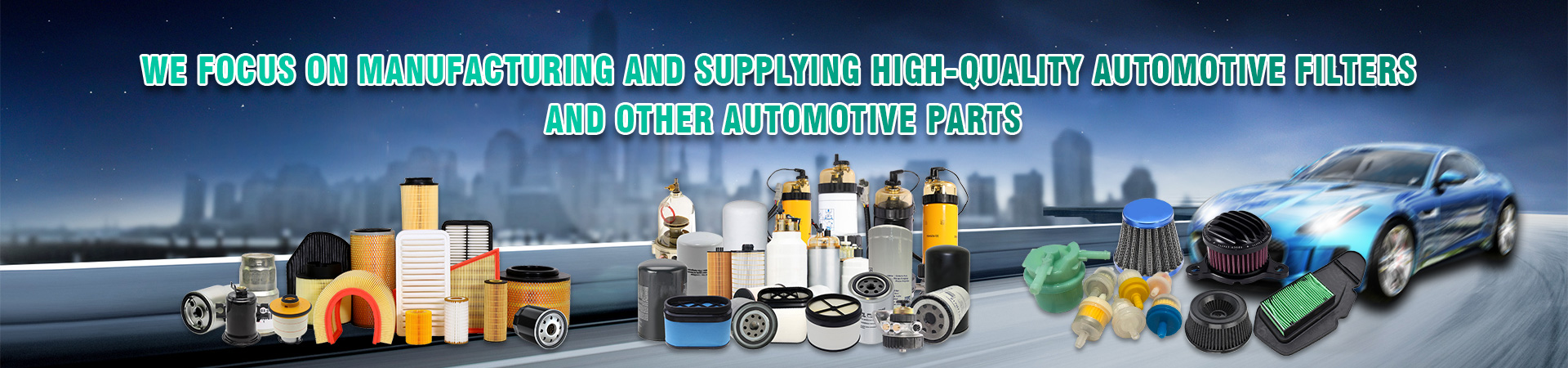

From Our Factory Floor to Your Warehouse: What’s Actually Changing in Automotive Filtration (and How a Factory-Direct Partner Helps You Stay Ahead)
If you buy filters for the aftermarket, you already know the product hasn’t changed much in decades—a housing, a pleated media pack, a gasket, and a label. What has changed is everything around the product: the vehicles filters go into, the regulations that govern how they enter your market, and the expectations your customers bring to the counter.
As a factory that builds filters and ships them directly to distributors, importers, and private-label brands, we see these shifts from the production side every week. This piece is not a market report. It is a practical look at what is changing on our lines, in our testing lab, and in the documentation we prepare for shipments—and what that means for the partners who buy from us.
The Aftermarket Is Not Shrinking—It Is Splitting
The global automotive filters market was valued at roughly USD 21 billion in 2026 and is projected to grow at a mid-single-digit CAGR through the early 2030s. But that headline number hides a structural split.
On one side, the installed base of gasoline and diesel vehicles remains large, and filter replacement is still tied to mileage, maintenance cycles, fuel quality, and road conditions. Oil filters, fuel filters, and engine air intake filters continue to move through aftermarket channels in volume. On the other side, battery electric vehicles reduce demand for oil and fuel filters but increase emphasis on high-efficiency cabin filtration, thermal-management filtration, and brake dust control. Electric vehicles still need filtration—air is used to cool battery packs, and cabin air filters remain a core comfort and health component.
For a buyer, the practical takeaway is straightforward: a filter catalog built only around legacy ICE part numbers is increasingly incomplete. The suppliers that add value are the ones that can cover both sides of the split without forcing you to manage two separate vendor relationships.
Cabin Air Filters Are Moving from “Nice to Have” to Volume Driver
The cabin air filter category deserves separate attention because it is where aftermarket growth is most visible. The global cabin air filter market is forecast to grow from around USD 5.5–5.9 billion in 2025–2026 at a CAGR in the 6% range, with the aftermarket holding the dominant share of revenue. Replacement frequency gains, rather than new-vehicle sales alone, are driving unit demand.
What is changing inside the product is just as important. Buyers are no longer asking only for a particle filter. Demand is shifting toward HEPA-grade media, activated carbon layers, antimicrobial treatments, and multilayer designs that address fine particulate matter, allergens, smoke, odors, and volatile organic compounds. Leading EV makers have integrated advanced cabin filtration with high-efficiency particulate filters, and that expectation is filtering down into the aftermarket.
From our factory’s perspective, this means the media selection, pleating consistency, gasket sealing, and labeling accuracy matter more than ever. A cabin filter that looks correct but leaks air around the media pack, or uses a carbon layer that loses adsorption capacity prematurely, will generate returns—not repeat orders.
Compliance Is Now a Production Input, Not a Shipping Afterthought
The regulatory environment for filter exports has tightened in ways that directly affect how a factory prepares an order.
In the European Union, from 1 July 2026, generic mechanical components placed on the EU market—including filter assemblies—must be accompanied by an English-language Declaration of Conformity and technical documentation, submitted by importers through the EUDAMED system. The documentation must be ready no later than the date of dispatch, not upon arrival or customs clearance. For filters specifically, CE marking involves material recycling and restricted-substance requirements under REACH, not just a label on the box.
In North America, the compliance logic is different but no less demanding. Oil filters are classified as general aftermarket parts and do not require DOT certification—in fact, printing a DOT mark on a non-regulated product is a violation. But major buyers increasingly require performance validation against SAE USCAR-36 (2021 edition), which covers burst strength, hydraulic pulse durability (ISO 4548-5), vibration fatigue (ISO 4548-7), cleanliness (ISO 16232), and corrosion resistance (ASTM B117). Third-party test reports from SGS, Intertek, or TÜV have become the de facto currency for credible North American aftermarket programs.
What this means for a buyer is that the lowest quoted unit price is not the lowest landed cost if the shipment arrives without the right documentation or fails a buyer’s incoming performance check. A factory that treats compliance as part of production planning—not a last-minute paperwork task—removes that risk from your side of the transaction.
What “Factory-Direct” Actually Delivers in This Environment
Many trading companies can source filters. The difference in a factory-direct relationship shows up in three places.
First, media and process control. IATF 16949 is the baseline quality management standard for automotive suppliers, and it is not a marketing badge—it requires defect prevention, process control, and continuous improvement across every production lot. A factory operating under IATF 16949 can trace a finished filter back to the media roll, the adhesive batch, and the operator station. When a buyer flags a performance issue, the response is a production correction, not a supplier blame loop.
Second, customization without minimum-order paralysis. Aftermarket buyers increasingly need application-specific coverage: a cabin filter for a specific EV platform, a fuel filter rated for a particular fuel quality, or a private-label line with your own branding and packaging. A factory with in-house pleating, assembly, and labeling can run these programs without the lead-time penalties that a trading intermediary introduces. OEM and ODM collaboration is routine on our side—the constraint is tooling and planning, not willingness.
Third, shipment-level consistency. When the factory is the supplier, the carton that leaves the line is the carton that reaches your warehouse. There is no separate quality inspection at a trading company’s warehouse, no re-labeling step that can introduce mismatches, and no information gap between what was produced and what was ordered. For buyers managing multiple SKUs across multiple markets, that single point of accountability is worth more than a marginally lower FOB price.
A Practical Checklist for Your Next Filter Sourcing Review
If you are reviewing filter suppliers this quarter, the following questions will separate factory-direct partners from intermediaries:
-
Documentation readiness: Can the supplier produce an English-language Declaration of Conformity and technical file for EU-bound filter assemblies, ready at dispatch?
-
Performance validation: Are SAE USCAR-36-aligned test reports available for oil filters, and can the supplier support third-party testing for buyer-specific requirements?
-
Cabin filter media transparency: Can the supplier specify the media grade (HEPA, activated carbon, multilayer) and provide airflow and pressure-drop data, not just a part number?
-
EV coverage: Does the catalog include battery cooling air filtration and high-efficiency cabin filtration options, or is it exclusively ICE-oriented?
-
Quality system evidence: Is the factory IATF 16949 certified, and can it show process controls for pleating, bonding, and gasket placement?
-
Customization terms: What are the realistic MOQs and lead times for private-label packaging or application-specific media changes?
None of these questions require a long presentation to answer. A factory that lives with these requirements daily can respond with documents, samples, and production data—not promises.
The Bottom Line
The filter itself is a mature product. The supply chain around it is not. Compliance timelines are tightening, the vehicle mix is diversifying, and buyers are being asked to cover more applications with fewer supplier relationships. A factory-direct partner does not make those challenges disappear, but it does put the responsibility for media quality, documentation, and shipment consistency in the same building where the filter is made—which is where it belongs.
About CONGBEN
We are a China-based automotive filter manufacturer with our own factory, serving aftermarket distributors, importers, and private-label brands in Europe, North America, and other export markets. Our product range covers oil filters, fuel filters, air filters, cabin air filters, and application-specific filtration solutions. We operate under IATF 16949 quality management and support OEM/ODM programs with in-house media selection, assembly, and export documentation. For inquiries or sample requests, contact email:ivy@hbcongben.com。